
You Never Step Into The Same Wuji Twice

Any book of old Zen stories will feature at least one tale of a wayfaring monk who travels thousands of miles across treacherous terrain in search of the teachings of some renowned old master living in the furthest reaches of some remote mountain monastery, only to invariably encounter the guy at the gate with his rude greeting to the effect of, “You must be mistaken, Monk. We are not taking new students, nor have we any accommodations for you here. I’m afraid you’ll have to turn back the way you came.”
This is, of course, a test. The monk, having come too far only to be turned away like this, by this guy, resigns himself to standing out barefoot in the snow or rain for weeks or whatever until that guy at the gate is satisfied that he has proved his earnestness. Suddenly it turns out to be the case that “Aha! - there is plenty of room for you after all. Let me show you to your quarters.”
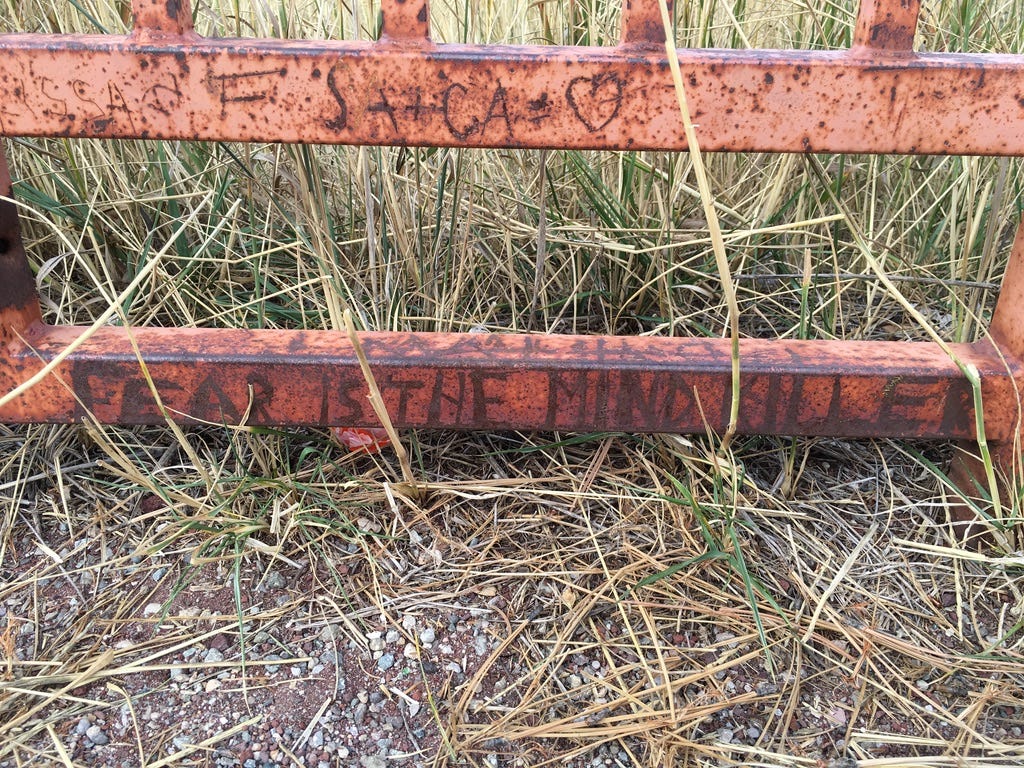
Standing in Wuji, or any other posture for that matter, you assume the posture, but this is just the journey to the gate - you still have to wait to be let inside.
Inside what?
Within these practices, distinct changes in the texture of the posture arise with patient waiting and the experience of duration.
Practice consists, in some sense, of convincing the guy at the gate that I am serious.
How? Even on a good day, usually for the first 40 minutes or so I am fighting the posture, whether I think I am or not. It takes time to settle in.
‘Fighting’ usually means I am trying to exert control somehow rather than trusting my body.
The tyrannical spiritual micromanager can’t bear the thought of wasting any time and starts barking orders: “Your shoulders aren’t set right. This will be a bad practice. Remember your breath! Your pelvis isn’t sinking, your spine isn’t stretching! Let’s adjust the hips, they don’t feel right. Oh shit… I forget to send that email… there goes that neighbor’s damned dog barking again - ruining my concentration”
The frantic chatter of the mind echoes off all surfaces. You can’t see any door forward, let alone figure out how to open it.
You are at the gate, but it resembles a dead end.
Since one can’t control, it is hard to know exactly how to give up control. Usually, the mind becomes frustrated and tires itself out.
The torrent of mental backwash continues on and on, gradually reaching its ebb, and then…something changes.
It is not subtle, and can come on seemingly out of nowhere. All of a sudden, you feel like…oh…I am in wuji now.
Don’t get too excited.
First off, of course, I am not really ‘in wuji’ if I catch myself saying that I am. And then second, no… there is more to come. BUT that is usually my reaction to this sudden shift in quality - there is a noticeably different flavor to the posture all of a sudden. I wasn’t here just a minute ago.
Seriously - do not get too excited. Excitement will lead to grasping, and grasping leads to my getting bounced out just as quickly as I found myself here.
Inevitably, I get bounced out. I find myself back in front of the gate.
So back to ‘grinding’ for a little bit. Perhaps frustrated with being ignored, with not being in control, the micromanager is getting restless: “you’ve gotten what you’re going to get out of this. It’s almost lunchtime. Don’t you need to pee? This is pointless. Let’s do a moving exercise, etc..”
Sticking with this for another interval, standing in yet another vestibule, waiting to be let in to the next chamber.
I find a different texture here as well; I am again engaged, trying to maintain an indifferent participation, of just absorbing into the distinct environment of this new chamber.
And so on and so forth. I profess I do not know where it ends up, how many chambers there are. I have not gone through many. But there does seem to be a pattern here.
Intervals
The insight here is not the order in which these sequences of tonality occur, but just the fact that they occur.
Knowing that all of these states are transitory, and that they will change, that there is always an after, and never a place of permanent settling, allows curiosity keep pushing me to see what is around the next corner, and the next one, and the next one.
Sometimes the stretches are long, very long. This is where I have to battle myself and, I think, at least at the level I am at, one of the main aspects of practice - that of experiencing and confronting all the myriad ways that I try to defeat myself, and refusing to believe them.
But as long and grinding and wearying as some of these stretches are, eventually you get to that corner and - goodness - suddenly it opens up again into something beyond quite beyond my imagination.
And these are the vistas that (again, I think), even if I inhabit it - taste the experience - for just a few moments, over time, they are what painstakingly train the system to reorder itself into a fundamentally different, more porous, more open mode of being.
Each taste of those moments is a drop of a little pebble into a river, that will eventually change the course of things.
It makes you less excitable, less reactive.
Do not try to sink into the exact progression and replicate it with every practice session. That is a recipe for stagnation. Just trust that it will change, that the ‘grinds’ will level out, and that the posture will take on an entirely new flavor.
Permanent Labels for Impermanent States
I’m using labels here - ultimately it is all ‘practice,’ all one inseparable whole - and words like ‘grind’ or ‘vista’ or ‘interior’ can be unhelpful. But they are useful for closing this piece with a reflection on impermanence.
Within these ‘grind’ stretches, for instance, this quality of impermanence reminds me that, if I am patient and observant, there is a way through. In these spaces, I need to remember the fundamentals, maintain my attention, return to the breath, and not engage with or begrudge the mind, but to be observant of what it is revealing about my relationship to the posture I am holding:
What labels does it apply?
What stories is it creating?
Where else do I see these patterns?
What excuses do I recognize from other areas of life?
What is the fundamental essence of this experience that the mind is denying?
If I really lean into it and feel it, is the label real, is the story true?
The imagination is telling me that I’ve hit the limit; but is that really the limit of my imagination, or just the limit of my humility?
And then in the interior spaces, the impermanence likewise reminds me not to grasp or hold on to them - the more I try to control the experience - this state that the mind couldn’t imagine existing just a few moments ago - that if I try to control them I will lose it.
Once in that interior mode, I try to just remain with it, as best I can, treating it as though beautiful wild animal is approaching cautiously, sizing up my intention, wondering if it is safe to take a few nibbles of a leaf from my patient outstretched hand. Can I just be with the experience, and resist the impulse to possess it?
That is a concept, albeit a helpful one, for setting the conditions for what is really trying to happen here to occur. All the elements were there all along, but it is only possible to be aware of them collectively in the same space under certain conditions: through patience, remaining calm and non-acquisitive - the animal, the leaf, my body, are allowed to merge into the collective space ‘we’ occupy.
This feels like the practice. You yourself are the gate. You make the determination of whether you are fit to be granted access.
Really well written 👏 I found this to be very insightful. Great “boots on the ground” of practice stuff.